!!link!! - Boy Fights Azov Films Top
TE200, TE210, TSC MH641T, all modelsUnion Label
Label design and printing software
- Label design
- Templates
-
Customization of elements
 text
text  labels
  graphics
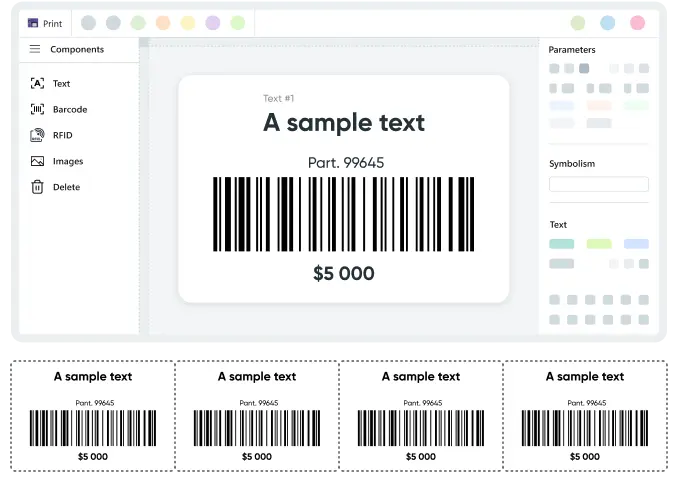
Label design and printing software
text labels graphics
Supports printing on TSC and other popular label printers











Create a text element

Select an Excel file as the data source

Assign the corresponding columns of the table to the elements

Set the print range and send to print
 Support for encoding RFID tags on Zebra, Postek and Printronix printers
 Recording codes from a connected database or Excel file or values specified manually into the label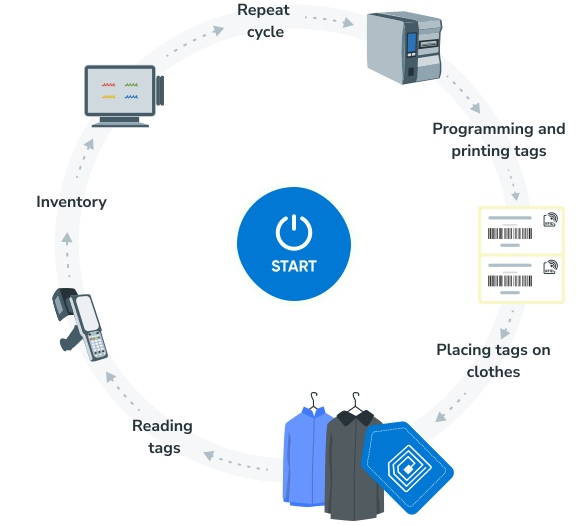
 Upload .csv or .xlsx Excel files from your PC
 Create labels for product marking
 Enjoy your print results
 Use the necessary template
 Print labels for several types of products
 Select the required size and format. Print labels on a standard printer — A4 sheet or thermal label
The built-in label editor will allow you to create any layout in just a few minutes. The application also includes a set of ready-made templates created for most international standards.

In recent years, the world of martial arts entertainment has witnessed a significant shift with the emergence of Azov Films. This relatively new production company has taken the industry by storm, captivating audiences with its high-octane action sequences, intense fight choreography, and a fresh perspective on the martial arts genre. At the forefront of this movement is a young and talented fighter named Boy Fights, who has become synonymous with Azov Films' success.
This is the long-form masterpiece. Trench Brat intersperses a 3-minute fistfight between two brothers with archival footage from the Battle of Mariupol. The director (a 19-year-old film student known only as "Rostyk") uses a split screen. boy fights azov films top
The top films listed above— Schoolyard Volya, Trench Brat, The Wolfsangel Brawl —will not be taught in film school. But they are the most honest artifacts of the 2020s so far. They show us that in the absence of a peaceful future, the young will simply re-enact the wars of the old, one shaky smartphone video at a time. In recent years, the world of martial arts
Set in the Donbas region, 12‑year‑old Anya (note: not a boy, but the film’s narrative heavily features her brother Dmytro , a 14‑year‑old) discovers a hidden cache of weapons meant for an Azov militia. Determined to prevent the escalation, Dmytro teams up with local activists to expose the supply chain. This is the long-form masterpiece
The footage didn’t win the war. But it did something rarer: it showed the truth behind the “Top Shot”—the hunger, the lies, the children’s shoes. Lukyan never made another film. He couldn’t. He had already shot the only scene that mattered: a boy fighting Azov not with a gun, but with a roll of stolen footage, and winning not a battle, but the right to remember.